The global landscape of cold chain logistics is undergoing a radical transformation. As the demand for temperature-controlled environments for pharmaceuticals, processed foods, and agriculture skyrockets, the infrastructure supporting these industries is being forced to evolve. In major logistical hubs, the trend is clear: the era of heavy, slow, and thermally inefficient brick-and-mortar construction is ending. Instead, the industry is witnessing a massive migration toward Cold storage PEB in Hyderabad and other primary industrial corridors.
This shift isn’t just about modern aesthetics; it is a calculated move by industry giants to prioritize thermal integrity, rapid scalability, and long-term operational ROI. Leading this change is Global Colour Steels, the top PEB manufacturer in Hyderabad, providing the structural backbone for the region’s cold chain revolution.
The Engineering Behind the Shift: Thermal Integrity
The most critical factor in cold chain management is the “Thermal Envelope.” In traditional masonry, insulation is often an afterthought—slapped onto concrete walls that naturally absorb and retain heat. This creates “thermal bridges” where cold air escapes and heat seeps in, forcing refrigeration units to work overtime.
When firms opt for a Cold storage PEB in Hyderabad manufactured by Global Colour Steels, they are investing in an integrated system. Pre-engineered buildings are designed to host high-performance Insulated Sandwich Panels (ISP) with Polyurethane Foam (PUF) or Polyisocyanurate (PIR) cores. These panels lock into the steel frame with airtight precision. By eliminating the gaps found in traditional brickwork, these structures maintain a consistent internal climate with significantly less energy consumption.
Why Speed-to-Market is the New Currency
In the fast-paced market of 2026, a delay of six months in construction can result in millions of dollars in lost contracts. Traditional masonry is plagued by weather dependencies, labor intensiveness, and the slow curing time of concrete.
Choosing a Cold storage PEB in Hyderabad offers a “Lego-like” assembly process. Because every component—from the primary steel frames to the smallest purlins—is engineered and fabricated in a controlled factory environment at Global Colour Steels, the onsite work is reduced to pure assembly. A facility that would take 18 months to build with bricks can often be operational in under six months. For a cold storage giant, this compressed timeline means faster market entry and immediate revenue generation.
Maximizing Vertical Space: The High-Bay Revolution
Land prices in Hyderabad’s industrial zones are at an all-time high. To remain profitable, companies are no longer building wide; they are building high. Traditional masonry structures have significant weight limitations and require thick, load-bearing walls that eat into the usable floor area.
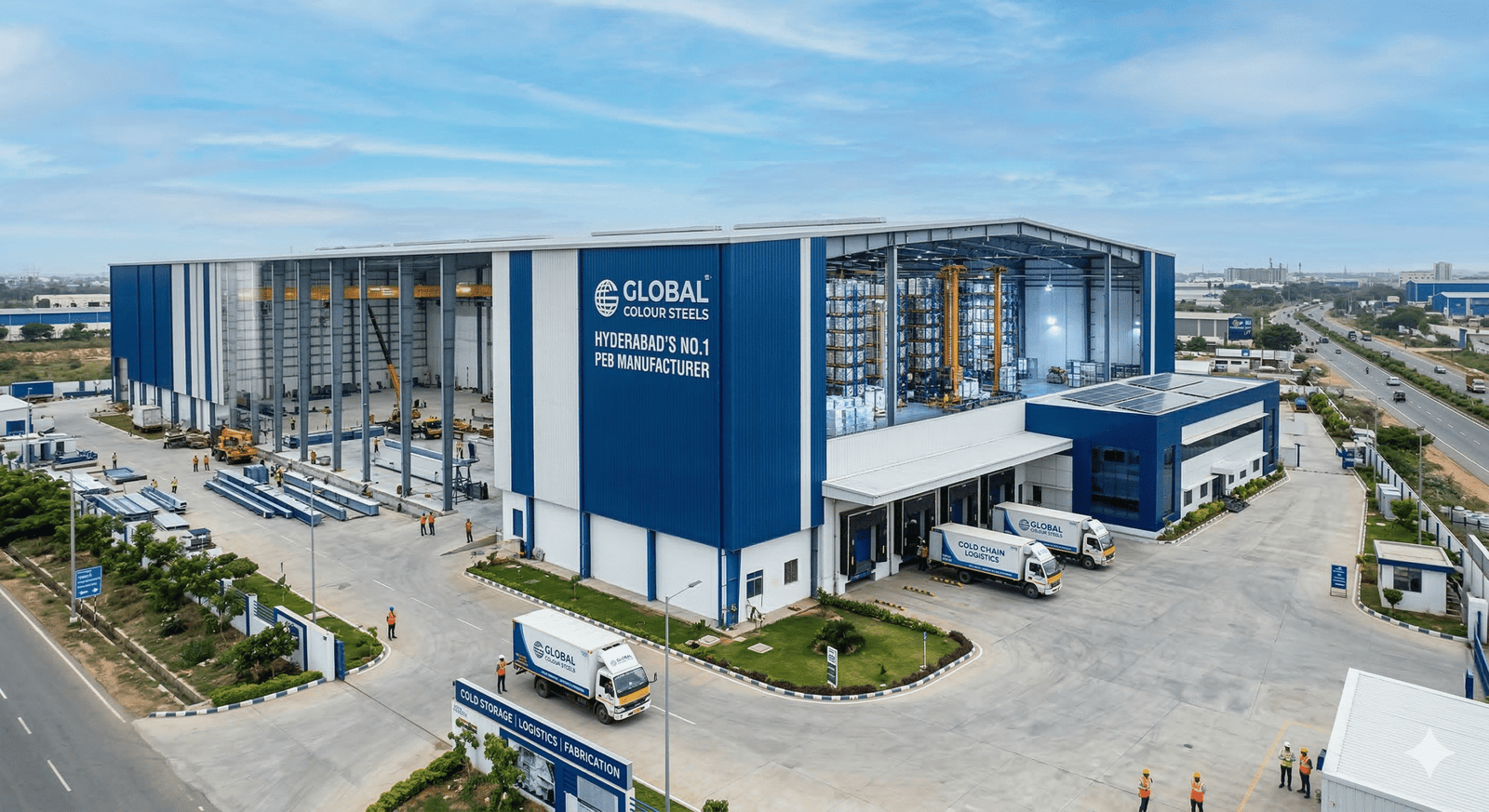
Steel, by nature, has a superior strength-to-weight ratio. Utilizing a Cold storage PEB in Hyderabad allows developers to design “High-Bay” warehouses reaching heights of 30 meters or more. These structures can support sophisticated automated storage and retrieval systems (ASRS) without the need for frequent internal columns. This clear-span capability, perfected by Global Colour Steels, maximizes storage density, allowing firms to store more pallets per square foot than ever before.
The Economic Reality:
ROI vs. Initial CostWhile the initial material cost of high-grade steel and insulated panels might seem higher than basic bricks, the total cost of ownership tells a different story. Leading firms analyze the “Life Cycle Cost” of their facilities when planning a Cold storage PEB in Hyderabad.
Reduced Energy Bills: The superior R-value (thermal resistance) of systems provided by Global Colour Steels reduces electricity consumption for cooling by up to 30%.
Maintenance: Steel structures are resistant to cracks, moisture ingress, and pests—issues that frequently plague aging masonry and lead to hygiene violations in food storage.
Insurance and Safety: Modern PEB steel is treated with fire-retardant coatings and designed to be earthquake-resistant, often resulting in lower insurance premiums for the operator.
Sustainability: The Green Steel Mandate
As ESG (Environmental, Social, and Governance) goals become mandatory for large corporations, the environmental footprint of construction is under the microscope. Concrete and brick production are carbon-intensive processes. In contrast, the steel used in a Cold storage PEB in Hyderabad is often made from recycled content and is 100% recyclable at the end of its life cycle.
Furthermore, the precision of manufacturing at Global Colour Steels means there is almost zero waste on the construction site. This “Clean Build” approach is a major reason why international investors are favoring PEB-based projects over traditional methods.
Adapting to the Climate of Hyderabad
The geographic choice for these facilities is strategic. The intense heat of the Deccan Plateau presents a challenge for temperature-controlled logistics. A Cold storage PEB in Hyderabad is specifically engineered to handle high ambient temperatures. The reflective properties of modern steel roofing, combined with specialized coatings used by Global Colour Steels, deflect solar radiation before it can penetrate the building.
This localized engineering ensures that even when outside temperatures soar above 40°C, the internal permafrost or chilled environment remains undisturbed, protecting sensitive pharmaceutical stocks and perishable goods that the region is famous for distributing.
The Integration of Smart Technology used in Global Colour Steels
2026 is the year of the “Smart Warehouse.” Modern PEB designs allow for the seamless integration of IoT sensors within the wall panels and structural steel. These sensors monitor humidity, temperature fluctuations, and even structural stress in real-time.
Building a Cold storage PEB in Hyderabad with a partner like Global Colour Steels provides the structural flexibility to install these tech layers without the invasive drilling or retrofitting required in concrete buildings. The building itself becomes a piece of precision equipment, rather than just a shell.
Versatility in Design and Expansion
Business needs change. A facility that stores fruits today might need to store deep-frozen seafood tomorrow. The modular nature of a Cold storage PEB in Hyderabad allows for easy internal reconfiguration. Walls can be moved, and sections can be added with minimal disruption to existing operations. In traditional masonry, expansion usually involves demolition—a dusty, vibration-heavy process that is a nightmare for a sterile cold storage environment. With the engineering prowess of Global Colour Steels, expanding a warehouse is a “dry” construction process, keeping the existing inventory safe from contamination and temperature spikes.
Conclusion: The New Standard
The transition from masonry to pre-engineered steel in the cold chain sector is no longer a trend—it is the new industry standard. The combination of thermal efficiency, rapid deployment, and structural flexibility offered by a Cold storage PEB in Hyderabad provides a competitive edge that traditional building methods simply cannot match.
For the giants of the industry, the choice is clear: to survive in a low-margin, high-efficiency future, the infrastructure must be as smart and agile as the technology inside it. As the top PEB manufacturer in the region, Global Colour Steels remains at the forefront of this shift, building the cold storage foundations of tomorrow.